If you’ve read news headlines about delivery riders in South Korea earning $7,000 to $8,000 USD (10 million KRW) a month, you might think it’s a gold mine. As a rider who has navigated the streets of Seoul for three years using Baemin Connect and Coupang Eats, I’m here to give you the unvarnished truth.
While “mythical” high earners do exist, the reality for a rider following safety regulations is much closer to the national minimum wage. Here is a breakdown of what a delivery professional actually makes in 2026.

Baemin Connect vs. Coupang Eats: Which Pays More?
In my experience, Baemin Connect consistently offers better rates for mid-to-long distance deliveries.
- The Price Gap: For deliveries with a base fare above 4,000 KRW, Baemin usually pays 500 to 1,000 KRW more than Coupang Eats for a similar distance.
- The Strategy: To maximize hourly rates, I gravitate toward high-density commercial areas like Jongno or Hongdae. In these spots, the “call gap” (idle time between orders) is minimal, ensuring a steady flow of income.
The Reality of Hourly Earnings
While the media highlights top earners, my earnings—adhering to roughly 90% of traffic regulations—look like this:
| Time Slot | Hourly Rate (KRW) | Note |
| Morning (09:00 – 11:30) | 12,000 – 13,000 | Steady pace |
| Lunch Peak (11:30 – 13:30) | 13,000 – 15,000 | High demand |
| Afternoon (14:30 – 18:00) | 12,000 – 13,000 | Occasional idle time |
For example, a typical afternoon delivery from a restaurant like Yeonsinnae Jjigoya might show 16 minutes on the GPS, but between finding the shop and navigating the drop-off point, it often takes 20 minutes. At 3,770 – 4,000 KRW per delivery, the math settles at roughly 12,000 KRW per hour.
Monthly Net Income Calculation
Let’s look at a standard 22-day work month (8 hours/day):
- Gross Monthly Revenue: ~2,266,000 KRW
- Fuel Costs: -88,000 KRW (approx. 4,000 KRW/day)
- Insurance: -54,000 KRW (based on 650,000 KRW/year)
- Taxes &Fees: -4.8% (Platform fees/withholding tax)
- Estimated Net Take-Home:~2,020,000 KRW
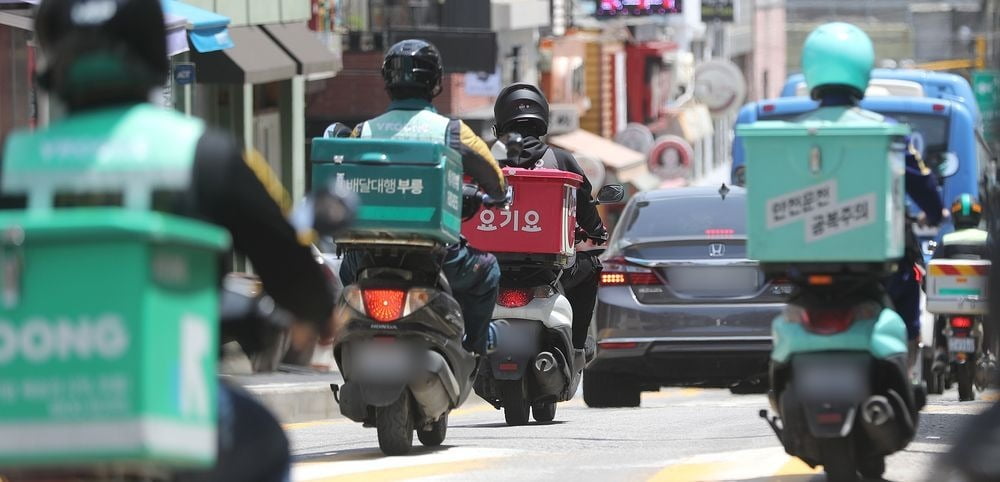
The “Risk Premium”: Why Some Make More
Reports from outlets like Maeil Business Newspaper suggest full-time riders average 4.14 million KRW. So, where is the gap coming from?
To hit those high numbers, riders must:
- Work 10–12 hours a day, 6–7 days a week.
- Complete high-volume “missions” (bonuses for a specific number of deliveries).
- The Danger Factor: Many high earners sacrifice safety for speed—speeding, lane-splitting, and ignoring signals.
When you see a rider earning double what I do, you aren’t just looking at “hard work”—you are looking at the price of risk. For those of us who prioritize coming home safely, the income is a modest, honest living, far from the “delivery jackpot” portrayed in the news.
