🌍 The Global Explosion of K-Pop Demon Hunters
The animated film “K-Pop Demon Hunters” has become a worldwide phenomenon, blending Korean culture, K-pop music, and fantasy storytelling in a way that has captivated global audiences.
Director Maggie Kang (Kang Min-ji) recently appeared on tvN’s You Quiz on the Block, where she shared behind-the-scenes stories, production insights, and the cultural vision behind this record-breaking project.
Since its release, the film has sparked an unprecedented wave of excitement:
#1 on Netflix in 43 Countries
236 million total views
Highest-viewed Netflix film to date
U.S. Box Office #1 with only two days of limited screenings
Over $25M revenue in two days
Global “K-Pop Demon Hunters” tours, sing-along bus events, and cultural challenges spreading across social media
This extraordinary rise proves once again that “the most Korean is the most global.”
🎵 The Power of K-Pop in Animation
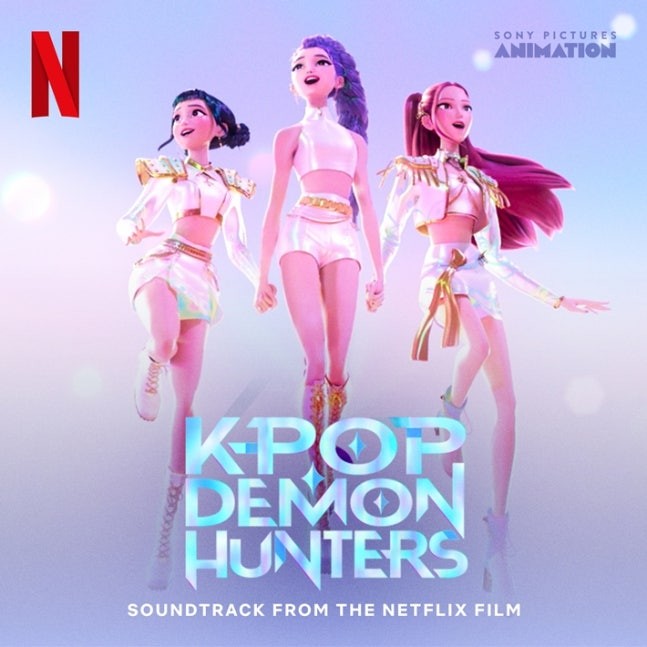
At the center of the film’s popularity is its irresistible soundtrack.
The original OST “GOLDEN”:
Hit Billboard HOT 100 #1
Topped the UK Official Singles Chart #1
Sparked millions of social media covers and dance challenges
Became an anthem with the lyric:
“We’re goin’ up, up, up — it’s our moment.”
Composer and singer Lee Jae, a former SM trainee for 10 years, delivered a powerful high-note performance that stunned the production team. Director Maggie Kang revealed she intentionally made the song challenging to deliver an “uplifting, emotional high” to global listeners.
🔥 The Story: Demon Hunters Meets K-Pop Idols
“K-Pop Demon Hunters” creatively blends:
Korean occult mythology
Traditional folktale imagery
K-pop idol culture
Modern Korean cityscapes
Global fandom energy
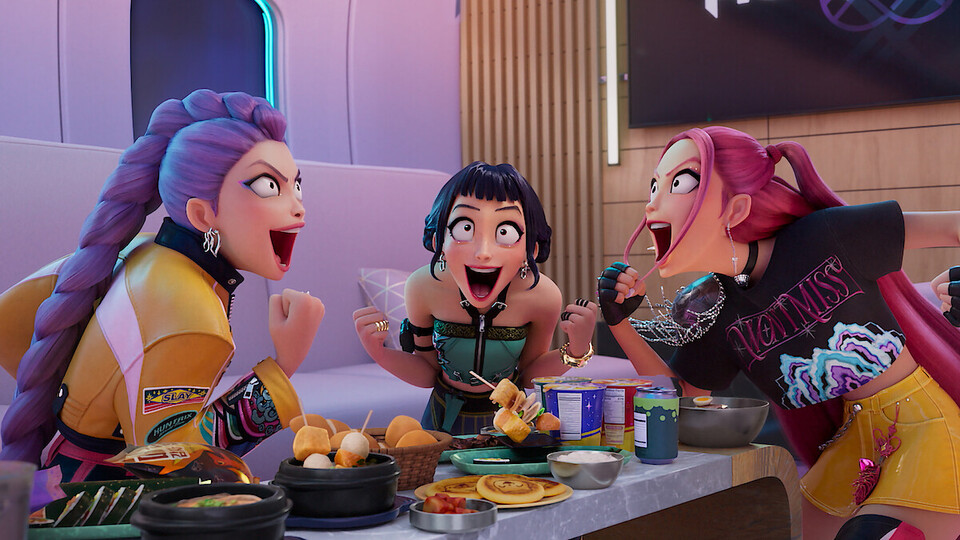
The story follows Huntress, a girl-group who secretly fights evil spirits while living as idols. They battle the demonic boy group Saja Boys, whose hypnotic songs control their fans.
The film reinterprets iconic Korean elements:
Grim Reaper (Jeoseung-saja) redesigned as a sleek, mysterious figure
Dokkaebi-inspired evil spirits
Shamanic rituals (“gut”) transforming into K-pop-style performances
Traditional motifs like norigae, Korean swords, Ilwol-obongdo, and more
This fusion has introduced millions of global viewers to Korean cultural heritage.
🌆 Korean Culture Brought to Life
The film’s visual accuracy comes from deep research.
Maggie Kang and her team traveled from Jeju to Seoul, capturing real locations such as:
Bukchon Hanok Village
Namsan Seoul Tower
Naksan Fortress Trail
Myeongdong
Traditional bathhouses
Korean subway scenes
Hanok clinics and traditional markets
Even tiny details — napkin placement, sitting on the floor, seasonal fashion, and the iconic sun visor worn by Korean “ajummas” — were recreated with precision.
🎤 A Talented Korean Cast Behind the Voices
The movie features an impressive Korean voice cast:
Lee Byung-hun as the charismatic villain Guima
Ahn Hyo-seop as the leader of Saja Boys
Kim Yun-jin as Celine
Maggie Kang’s own daughter voicing young Luni
Additional talented Korean-American actors supporting the project
Even director Maggie Kang herself voiced several cameo roles.
🐯 The Birth of Duffy — The Viral Tiger Mascot
One of the film’s breakout stars is Duffy, the adorable tiger based on traditional Korean folk art (hojagdo).
Inspired by the director’s own Himalayan cats, Duffy’s clumsy yet lovable personality is captured in the viral scene where he tries — and fails multiple times — to fix a fallen flowerpot.
🌐 Real-World Impact: A Cultural Movement
The success of “K-Pop Demon Hunters” has triggered tangible global effects:
Searches for “Korea” on Google increased 10x
Fans worldwide began visiting filming-inspired sites (“KDH pilgrimage”)
Korean bathhouse experience bookings rose 84%
Medical clinics featured in the film saw monthly visitors jump from 6,000 to over 20,000
National Museum of Korea’s attendance doubled within a year
This isn’t just a movie — it’s now a global cultural phenomenon.
✨ Director Maggie Kang: A Korean Storyteller at Heart
Having immigrated to Canada at age 5, Maggie Kang maintained fluent Korean thanks to her mother’s strict language lessons.
Despite holding Canadian citizenship, she proudly states:
“In my heart, I am 100% Korean.”
Her lifelong love for Korean TV, music, and culture shaped her creative vision — from childhood influences like H.O.T., Seo Taiji & Boys, and Deux to classic Korean animations and Western favorites.
🎬 From DreamWorks to Her First Feature Film
Maggie Kang worked for 20 years in animation, contributing as a storyboard artist on major films such as:
Shrek 3
Kung Fu Panda 2
Minions 2
Reaching the level of storyboard supervisor, she finally took the leap to direct her own feature — the first to truly present Korean culture, mythology, and K-pop as a unified cinematic universe.
🌟 Conclusion: Why K-Pop Demon Hunters Became a Global Sensation
The film’s success can be attributed to:
Authentic Korean cultural representation
High-quality storytelling and animation
Addictive K-pop music
Universal themes and emotional impact
Deep research and creative detail
Massive fandom support across the world
“K-Pop Demon Hunters” is not just an animation — it’s proof of the global power of Korean creativity.
