The director of the global hit $K-Pop$$Demon$$Hunters$, Maggie Kang (Korean name: Kang Min-ji), recently appeared on tvN’s You Quiz on the Block to share the fascinating stories behind her work. Here is an overview of the key topics from the interview.
🌟 A Worldwide K-Pop Sensation
The film has cemented the idea that “the most Korean things are the most global.” Kang was surprised by the sheer scale of the film’s success.
- Global Box Office Hit: The film topped the North American box office after only two days of special screenings, generating a profit of 25 billion KRW (approx. $18.8 million USD).
- Netflix Record Breaker: It hit No. 1 in 43 countries and has surpassed 236 million viewing hours, becoming the most-watched film ever on Netflix and is still breaking records.
- The Power of K-Culture: The blend of K-Pop and Korean culture in the battle against demons was praised as a “stroke of genius” by host Yoo Jae-suk.
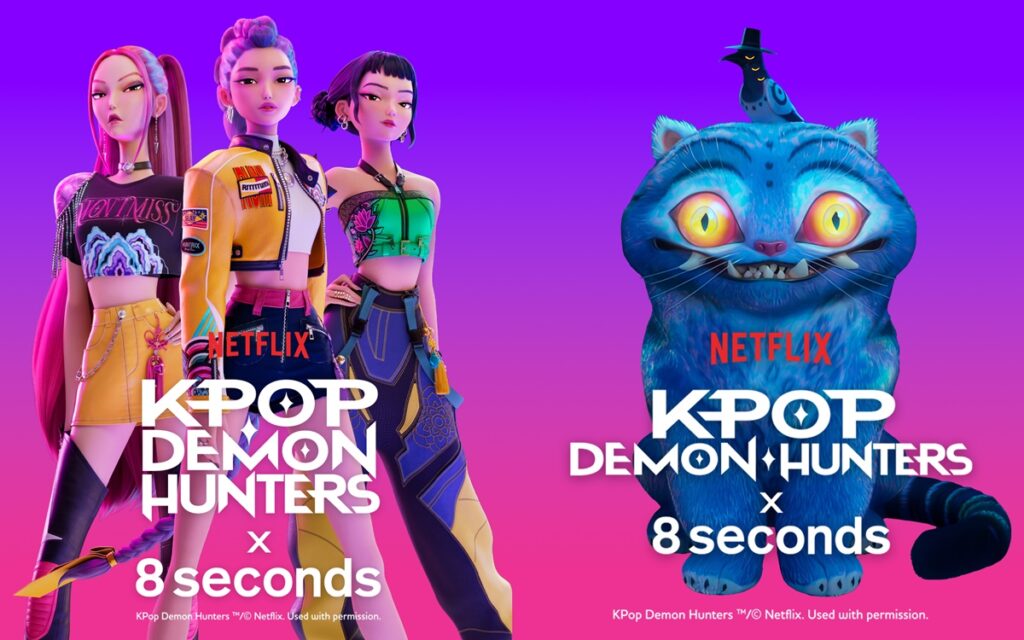
- Plot: The story follows the K-Pop girl group ‘HUNTRIX’ as they protect their fans from the demon boy group ‘Saja Boyz’.
🎶 Chart-Topping Music and Fan Challenges
The film’s music has been central to its feverish popularity.
- OST Dominance: The title song, “GOLDEN,” reached No. 1 on the Billboard Hot 100 and the UK Official Singles Chart. A total of eight OST tracks simultaneously lined up on music charts.
- Director’s Intention: Maggie Kang shared that while making the music, she hoped K-Pop fans would accept the songs as real K-Pop and the groups as real idols. However, she never anticipated the songs reaching the Billboard charts.
- The Writer Behind the Hit: Composer Lee Jae, who wrote and sang “GOLDEN,” became a hot topic after it was revealed he had been an SM Entertainment trainee for 10 years.
- Kang intentionally made “GOLDEN” difficult to sing, aiming for the “UP” feeling that high-note songs create, giving listeners an uplifting, positive power.
The “GOLDEN” Challenge: The song’s positive message and addictive chorus sparked the “GOLDEN” Cover Challenge across social media, leading to countless covers and parodies.
The “Soda Pop” Challenge: Another viral moment was the “Soda Pop” challenge, which garnered 13 million views.
🇰🇷 The Heart of Korea: Maggie Kang’s Personal Journey
Director Kang’s deep connection to Korea is the foundation of the film.
- Immigration and Language: She emigrated to Canada at age 5. Her mother insisted on rigorous Korean language study (3-4 times a week for several hours) to prevent her from forgetting her roots. She is now grateful that this effort made her Korean fluent.
- A Korean Heart: Despite holding a Canadian passport, she stated, “In my heart, I always felt 100% Korean.”
- Childhood Memories: She spent every summer vacation in Korea, which naturally immersed her in Korean sentiment, from watching popular TV shows to singing hit songs with cousins at noraebang (karaoke). She was a huge fan of H.O.T. and Seo Taiji and Boys.
- The Dream: Inspired by her film-loving father, she started drawing stories and characters. After realizing animation could be a career, she eventually joined Dreamworks as a storyboard artist, working on films like Shrek 3 and Kung Fu Panda 2.
💡 The Genesis of K-Pop Demon Hunters
The film was a 7-year labor of love born from a desire to bring Korean culture to the world.
- The Idea: After 20 years in animation, Kang realized no one had created the Korean-centric animated film she longed for. She decided to do it herself.
- Korean Mythology Reimagined: She realized global audiences weren’t familiar with Korean mythological figures like the Grim Reaper (Jeoseung Saja) and the Goblin (Dokkaebi).
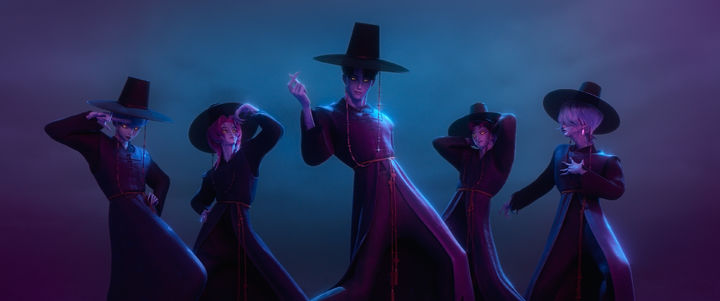
- She transformed the scary, black-robed Grim Reaper into the sophisticated and attractive ‘Saja Boyz’—the villain K-Pop group.
- The idea to pair ‘Demon Hunters’ with the need for a secret identity led to the perfect cover: ‘Idol’ + ‘Demon Hunter’.
Cultural Details: The film is rich with Korean traditions:
- The ‘Gut’ (Shamanic Ritual): The ritual of driving away evil spirits with song, dance, and ceremonial tools is reimagined as a K-Pop performance.
- Art and Tools: Elements like the Irworobongdo (Sun, Moon, and Five Peaks painting), Norigae (traditional pendant), and shamanic blades like Gokdo and Signeom are incorporated.
- Character Inspiration: The lovable tiger character Duffy was inspired by the Hojakdo (Tiger and Magpie painting) and Kang’s own flat-faced Himalayan cats. The scene where Duffy tries to right a fallen plant is an inversion of a cat’s tendency to knock things over.
📍 Korean Authenticity: From Seoul to the Screen
Kang and her team conducted extensive research trips to accurately portray the setting.
- Field Research: Kang traveled from Jeju Island to Seoul to personally visit locations, take photos, and experience the atmosphere with team members who had never been to Korea.
- Detailed Locations: The film is filled with recognizable Korean landmarks and everyday scenes:
- Namsan Seoul Tower
- Bukchon Hanok Village (She noted the narrow, steep streets and diverse brick patterns)
- Naksan Park Fortress Wall
- Public Bathhouses (Mok-yok-tang)
- Korean Traditional Clinics (Han-uiwon)
- Seoul Subways
Personal Touches: The Saja Boyz’ debut busking spot was set in Myeongdong, the neighborhood where Kang was born and where her parents met.
🎬 Behind the Scenes and Legacy
- Star-Studded Cast: The King of the Evil Spirits, Gwi-ma, was voiced by actor Lee Byung-hun. Kang was in awe of his charismatic voice, which she felt brought true ‘Korean film’ gravitas to the project.
- Korean Crew Collaboration: The meticulous details, from a grandmother’s sun-visor to the placement of rice and soup during a meal, were the result of a large team of Korean artists correcting and perfecting the cultural representation.
- The Love Letter: After 7 years of work, Kang expressed her deep emotion upon the film’s release. She confessed to having doubts about her right to represent Korea, having lived abroad for so long, but stated, “**K-Pop Demon Hunters is a dedication and a love letter to Korea and K-Pop culture, which I love and am proud of.”
- The Message: The core message of the film is to confront inner fears and find self-confidence. Characters Lumi and Jin-woo, who hide inner vulnerabilities, encourage viewers to “always strive to overcome” their anxieties and develop the inner strength to accept them.
