tvN <You Quiz on the Block>
Director Maggie Kang, the creative force behind K-Pop Demon Hunters, appeared on tvN’s popular talk show You Quiz on the Block, where she shared behind-the-scenes stories and personal reflections about the film. Here is a comprehensive summary of that conversation.
A Global Phenomenon Begins
- Sing-along buses for K-Pop Demon Hunters appeared in Chicago
- Only two days of special theatrical screenings, yet ranked #1 at the North American box office
- A worldwide sensation
- Netflix #1 in 43 countries
- 236 million total views
- Became Netflix’s most-watched film of all time, still breaking records
- The Korean creator who ignited the global KDH phenomenon: Director Maggie Kang
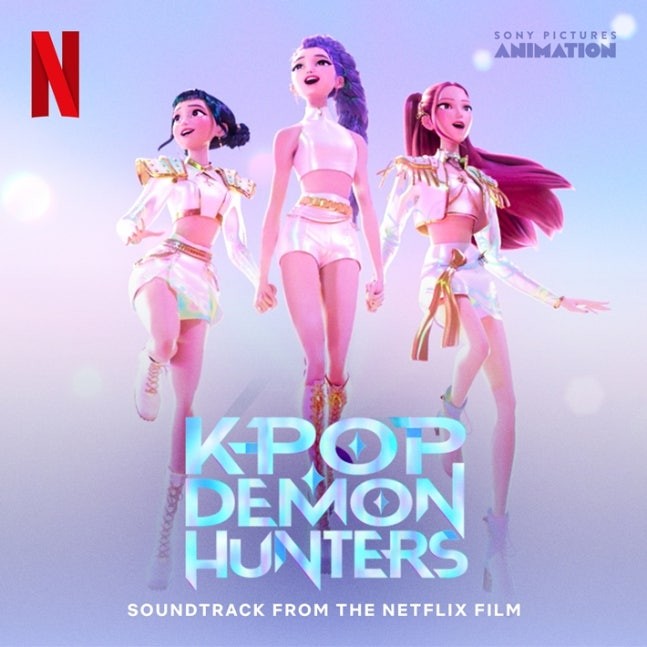
“Golden” — When the Most Korean Became the Most Global
“The idea that ‘the most Korean is the most global’ has become reality.”
Maggie Kang admitted she never imagined one film could gain this level of popularity.
Host Yoo Jae-suk praised the film’s brilliant fusion of K-pop and Korean culture in the battle against evil spirits, calling it “a masterstroke.”
K-Pop Demon Hunters tells the story of a K-pop girl group, Huntrix, who secretly protect the world from demons, battling an evil demon boy group, Saja Boys, while performing as idols.
- Released in June, ranked #1 in 43 countries
- 236 million cumulative views
- OST “GOLDEN”:
- #1 on Billboard Hot 100
- #1 on UK Official Singles Chart
- 8 soundtrack songs simultaneously charted
Maggie Kang explained that while creating the music, her hope was simply that K-pop fans would accept Huntrix and Saja Boys as real idol groups. She never imagined the songs would climb the Billboard charts.
“Seeing Huntrix and Saja Boys competing on Billboard felt surreal.”
Creating “Golden”
The song Golden was composed and sung by EJAE, a former SM Entertainment trainee of 10 years.
Maggie Kang recalled watching EJAE record the song in New York, singing extremely high notes repeatedly—20 to 30 times in a row.
“I asked her to make it difficult on purpose. High notes lift people up emotionally. I wanted a song that makes you feel empowered—because our movie gives positive energy.”
Lyrics like:
“We’re goin’ up, up, up, it’s our moment”
“Gonna be, gonna be golden”
helped fuel viral cover challenges, parodies, and massive global engagement across social media.
Cultural Impact Beyond the Screen
- Two-day U.S. theatrical release generated ₩25 billion KRW (~$19M USD)
- Fans waited 7 hours for sing-along buses
- Viral scenes:
- Eating an entire roll of gimbap in one bite
- “Soda Pop” challenge surpassed 13 million views
Global interest in Korean culture surged:
- Google searches for Korean culture increased 10x
- Korean bathhouse experiences +84% in transactions
- Filming-location Korean medicine clinic visits jumped from 6,000 to 20,000 per month
- National Museum of Korea attendance doubled to over 4 million annually
Maggie Kang’s Roots
- Emigrated to Canada at age 5
- Initially lost Korean language skills after switching entirely to English
- Her mother insisted she relearn Korean through rigorous study
“At the time, I hated it. Now I’m incredibly grateful.”
She spent every summer vacation in Korea, watching TV, singing the latest hits at karaoke with cousins, and absorbing Korean pop culture.
Her favorite artists growing up:
- H.O.T.
- Seo Taiji and Boys
- Deux
These influences appear throughout the film’s soundtrack.
“Even though I have a Canadian passport, I’ve always felt 100% Korean in my heart.”
From Storyboard Artist to Director
Inspired by her father’s love for films, Maggie Kang developed an early passion for storytelling and animation.
She worked as a storyboard artist at DreamWorks, contributing to:
- Shrek 3
- Kung Fu Panda 2
- Minions 2
She explained that storyboard artists visually translate scripts into camera angles, character movement, and emotional tone—forming the blueprint of an animated film.
K-Pop Demon Hunters is her directorial debut.
Why She Made K-Pop Demon Hunters
After 20 years in animation, Maggie Kang longed to see an animated film that truly represented Korea.
“I kept waiting for someone else to make it. When it didn’t happen, I thought—why not me?”
She drew inspiration from Korean folklore:
- Dokkaebi (goblins)
- Jeoseung Saja (grim reapers)
These elements evolved into demon hunters and stylish, mysterious antagonists.
The concept combined:
- Idol culture as a secret identity
- Korean shamanistic rituals reimagined as K-pop performances
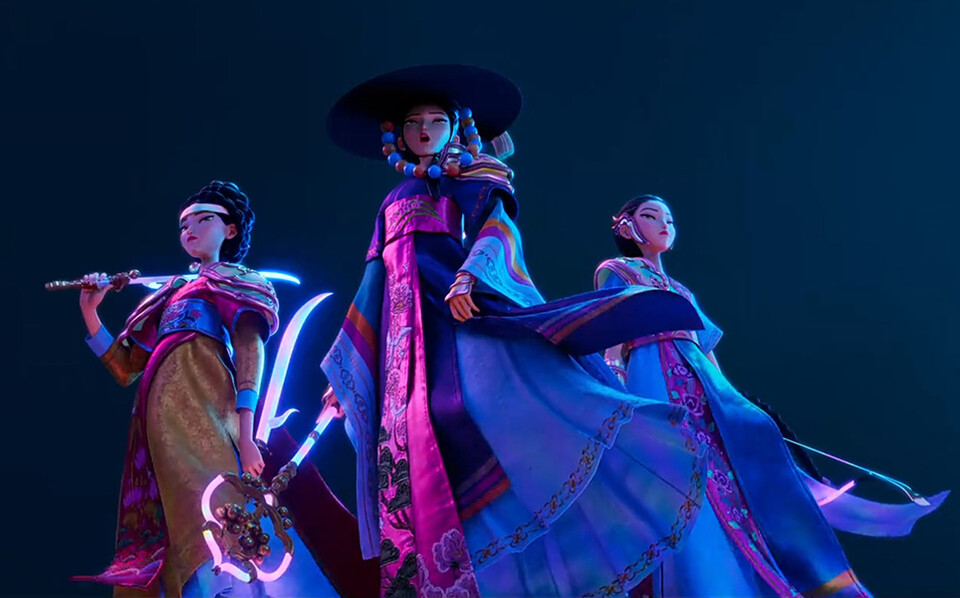
Traditional elements woven into the film include:
- Shamanic gut rituals
- Irworobongdo (royal sun-moon painting)
- Norigae accessories
- Ritual weapons
Meticulous Korean Details
Director Yoo Jae-suk praised the film’s astonishing realism:
- Women wearing sun visors with unmistakably Korean expressions
- Napkins placed before utensils
- Sitting on the floor instead of the sofa
- Seasonally mismatched clothing during transitional weather
Maggie Kang credited the many Korean artists on the production team.
“If the rice and soup were switched, someone would immediately say, ‘That’s wrong.’ This film was made together by Koreans.”
Voices and Cast
- Lee Byung-hun as the demon king Gwi-ma
- Ahn Hyo-seop as Jin-woo (leader of Saja Boys)
- Kim Yoon-jin as Celine
- Maggie Kang herself voiced several minor roles
- Her daughter voiced young Rumi
“Having Lee Byung-hun alone made the film feel like a true Korean movie.”
Seven Years, One Love Letter to Korea
- Total production time: 7 years
- Maggie Kang watched the film premiere on Netflix and burst into tears
“This movie is my love letter to Korea and K-pop.”
She admitted to deep insecurities:
“I wondered if I had the right to make a film representing Korea.”
The overwhelming global response erased those doubts.
“I poured my entire heart into this. If people didn’t like it, I thought I’d quit animation. That’s how much it meant to me.”
The Message
“The message is about overcoming fear within yourself.”
Through characters like Rumi and Jin-woo, the film explores hidden fears and insecurities.
“We may never completely erase our fears, but we can learn to acknowledge them—and grow stronger.”
